
April 4, 2026
How to Do a 5-Minute At-Home Health Check on Your Dog
Your vet sees your dog once a year. Here's a simple 5-minute routine you can do at home to stay ahead of changes between appointments.
How to Do a 5-Minute At-Home Health Check on Your Dog
Most dog owners rely entirely on annual vet visits to know how their dog is doing. That is one appointment every 365 days. A lot can change in between.
The good news: you do not need a medical degree to notice what is changing. You just need a routine and the knowledge of what to look for. This check takes about five minutes. Done weekly, it gives you a reliable baseline so when something shifts, you catch it early.
Here is how to do it.
Start at the Head
Eyes. Look at the whites. They should be white, not pink, red, or yellow. The cornea should look smooth and glossy. A small amount of crust in the inner corners after sleep is normal. Discharge that is colored, excessive, or present throughout the day is worth noting.
Ears. Lift each ear flap and look inside. Healthy ears are light pink, clean, and odor-free. Dark brown buildup, a strong smell, or visible redness are signals worth paying attention to. If your dog is shaking their head or scratching at their ears frequently, that context matters too.
Nose. A dog's nose can be wet or dry depending on the time of day and activity level. What you are looking for is discharge. Clear is usually fine. Yellow, green, or thick discharge is not.
Mouth and gums. If your dog allows it, lift the lip and look at the gums. Healthy gums are pink and moist. Pale, white, gray, or bright red gums are meaningful signals. Press your finger against the gum and release. The color should return within two seconds. Delayed return can indicate circulation issues.
Move to the Body
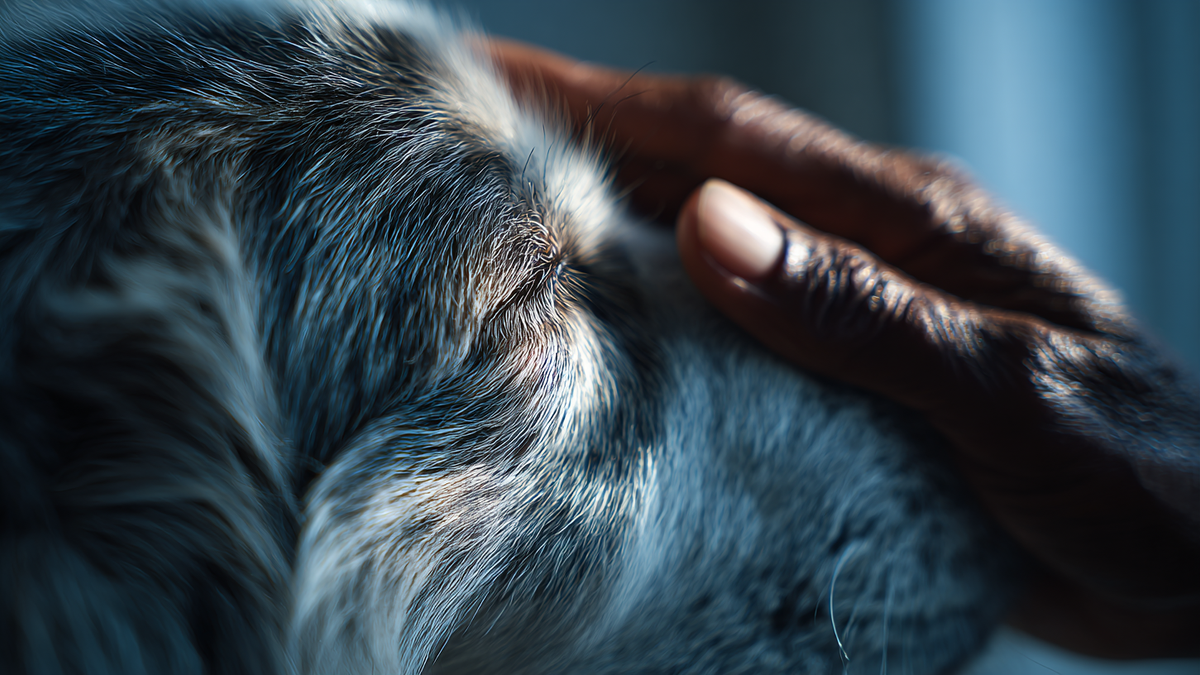
Coat and skin. Run your hands along your dog's body from neck to tail. You are feeling for lumps, bumps, or areas of tenderness where your dog flinches or pulls away. Part the fur in a few places and look at the skin underneath. Healthy skin is clean and consistent. Flakes, redness, bumps, or unusual odor are changes to log.
Weight and shape. You should be able to feel your dog's ribs with light pressure. Not see them, but feel them. If you have to press hard to find the ribs, that is a signal of excess weight. If the ribs are prominent without any pressure, that is a signal in the other direction. Looking from above, most dogs in healthy condition have a visible waist.
Abdomen. Gently press on your dog's belly. It should feel soft and your dog should be relaxed about it. Tensing, guarding, or obvious discomfort when you touch the abdomen is worth flagging to your vet.
Check the Legs and Paws
Watch your dog walk across the room. Are they putting even weight on all four legs? Any hesitation, stiffness when getting up, or favoring of one side?
Pick up each paw. Look between the toes for redness, swelling, or foreign objects. Check the pads. They should be firm without cracks or sores. Look at the nails too. Overgrown nails can affect how a dog walks and over time how their joints align.
Finish with Behavior
This part is not physical. It is observational. And it is the part most owners miss because it is harder to quantify.
Is your dog's energy level consistent with their normal? Are they eating and drinking at their usual pace? Any changes in sleep pattern, where they like to rest, or how they respond when you engage them?
Behavior is often the earliest signal something is off. Dogs do not self-report. But they do change, and consistent observation is how you notice.
The Point of Doing This Weekly
A single check tells you where your dog is today. A weekly check tells you whether things are trending in the right direction.
That is the whole value. Not panic about any single observation, but pattern recognition over time. Your vet cannot see what happens between appointments. You can.
How CANIQO Helps
CANIQO's health scan analyzes the visible signals from this check, including coat quality, eye clarity, and skin condition, and tracks your dog's health score over time. Instead of relying on memory, you have a record. Instead of guessing whether something looks different than last month, you have data.
Start a free health scan at caniqo.com. See what your dog can't tell you.