
March 30, 2026
The Difference Between a Tired Dog and a Sick Dog
Lethargy is one of the most common signs owners notice — and one of the hardest to read. Here's how to tell when your dog is just worn out versus when something else is going on.
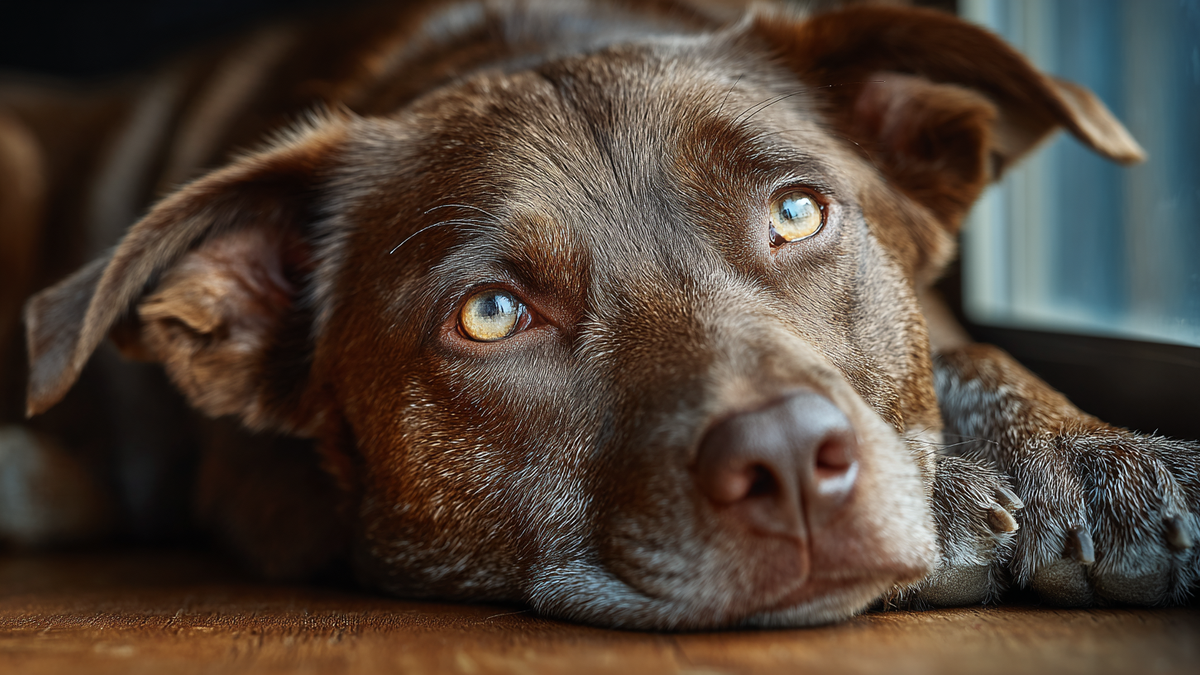
The Difference Between a Tired Dog and a Sick Dog
Every dog owner has been there. Your dog skips their usual greeting at the door, finds a quiet corner, and just... lies there. And you spend the next hour wondering: are they tired, or is something wrong?
It's one of the most common questions owners ask — and one of the hardest to answer without knowing what to look for. Lethargy looks the same whether your dog ran hard at the park this morning or is fighting something internally. The signals that separate the two are subtle, but they're there.
Here's how to read them.
Start With Context
The first question isn't "how do they look?" It's "what happened in the last 24 hours?"
A dog who had a long hike, a trip to the dog park, or an unusually stimulating day has a clear reason to be low-energy. That kind of tiredness tends to resolve with rest — usually within a few hours to overnight. They're quiet, but they're present. They'll still respond to their name, accept a treat, and follow you with their eyes even if they don't get up.
That context matters. Tiredness without a plausible cause is a different conversation.
Signs It's Probably Just Tiredness
Normal post-exertion rest looks like this:
Your dog is calm and still, but their body language is relaxed — loose muscles, soft eyes, no tension in the face or jaw. They respond when you engage them, even if slowly. They're interested in water and will eat if offered food. Their breathing is normal or slightly slower than usual. And the behavior resolves on its own within a reasonable window.
This is a dog recharging. It's healthy and expected, especially in active breeds or younger dogs who don't yet know their own limits.
Signs Something Else Might Be Going On
The version worth paying closer attention to looks different in a few specific ways.
The lethargy has no clear cause. Your dog had a normal day — nothing unusually physical or stimulating — and is still noticeably low-energy. When tiredness appears without a reason, that changes its meaning.
They're not bouncing back. Post-exertion rest clears within hours. Lethargy that persists into the next day, or that keeps recurring across several days, is a pattern rather than a recovery state.
Other signals are present alongside the low energy. This is the most important one. Lethargy on its own is ambiguous. Lethargy plus any of the following is a clearer signal worth acting on: reduced appetite or refusing food entirely, changes in thirst (notably more or notably less), digestive changes, reluctance to move or stand, changes in eye clarity or coat appearance, or unusual breathing patterns.
Their engagement with you is different. A tired dog still connects. A dog that's unwell often disconnects — less responsive to their name, no interest in things that normally capture their attention, a general flatness that feels different from relaxed.
Their body position tells a story. Dogs in discomfort often hold their bodies differently — tucked posture, hunched back, reluctance to lie in their usual position, or repeated repositioning as if they can't get comfortable. These postural signals are easy to miss but highly informative once you know to look for them.
The 24-Hour Rule and When to Call Your Vet
A useful baseline: if your dog's energy returns to normal within 24 hours and no other signals are present, you're likely looking at normal tiredness.
If lethargy extends beyond 24 hours without a clear physical explanation, or if any of the additional signals above are present, that's worth a call to your vet. You don't need to wait until it becomes obvious. Calling early with observations is exactly what vets want owners to do.
The conditions that cause lethargy range enormously — from minor infections and digestive upset to more significant internal issues. The lethargy itself isn't the diagnosis. It's the signal that something may need attention.
Why This Is Hard to Catch
Here's what most dog owners don't realize: dogs are wired to mask vulnerability. It's an instinct carried from their wild ancestry. By the time a dog's discomfort is unmistakable, it's often been building quietly for a while.
That's why the shift from "this is unusual" to "this is clearly a problem" can feel sudden even when it wasn't. The signals were present earlier — they just weren't obvious enough to register.
Paying attention to your dog's baseline is the whole game. What does their normal energy look like on a regular Tuesday? What's their usual response when you come home? How do they typically hold their body when they're relaxed?
Once you know that baseline, deviations stand out.
How CANIQO Helps
CANIQO tracks your dog's visible health signals over time — coat condition, eye clarity, posture, and skin — so you have a record of what normal looks like for your specific dog. When something shifts, you're not relying on memory. You have a trend.
That's the difference between reacting and catching things early.
Start a free health scan at caniqo.com. See what your dog can't tell you.