
May 24, 2026
What Tear Stains on Your Dog Actually Mean and When to Worry
Those reddish-brown streaks under your dog's eyes are not just cosmetic. Here is what causes tear stains and which ones are worth a closer look.
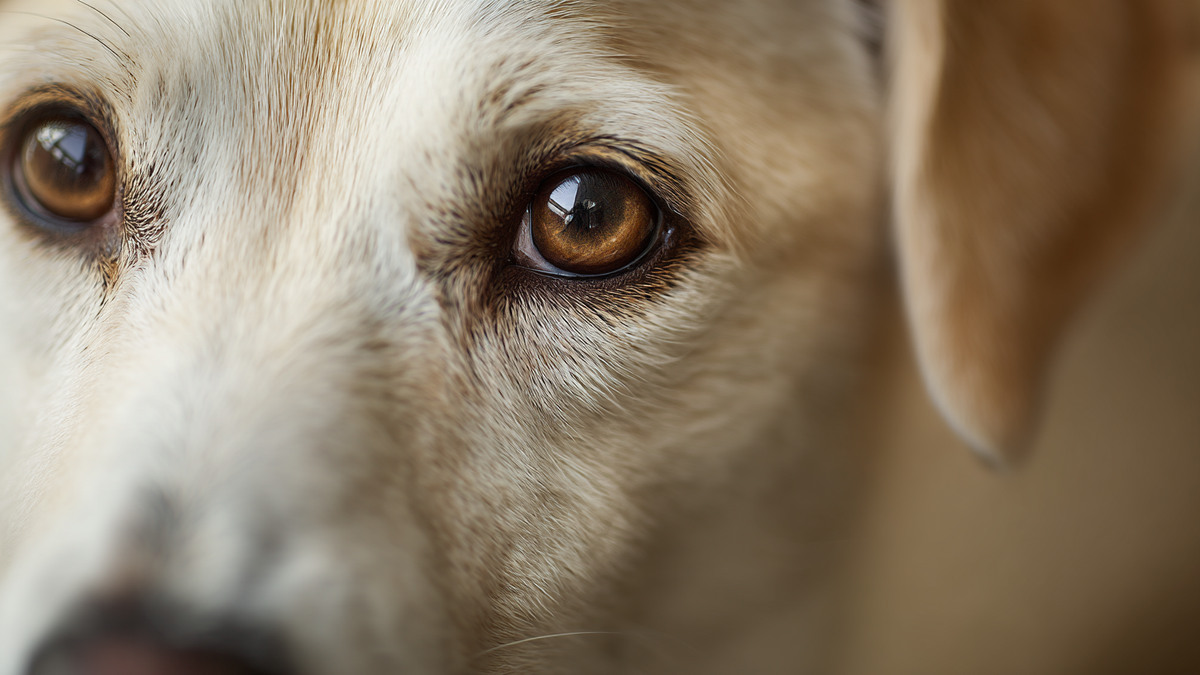
If you own a light-coated dog, you have probably seen them. Those reddish-brown streaks that run from the inner corner of the eyes down the fur of the face. They show up most visibly on white and cream dogs, but they happen across breeds. Most owners treat them as a cosmetic issue and move on. That is sometimes the right call. It is also sometimes a missed signal.
Tear stains are not just discoloration. They are a record of what has been happening at the surface of your dog's eyes for the past several weeks, and the pattern can tell you something useful if you know how to read it.
What Tear Stains Actually Are
The reddish-brown color comes from a substance called porphyrin. Porphyrin is naturally present in tears, saliva, and urine. When tears spill out of the eye and onto the fur, the porphyrin oxidizes when it hits the air and stains the surrounding hair. The color is iron-based, which is why it leans toward rust rather than yellow.
The staining itself is not harmful. The fur is dyed but the skin underneath is fine. What matters is not the stain. It is the reason there are enough tears spilling out of the eye to produce the stain in the first place.
Healthy eyes produce just enough tears to keep the surface moist, and those tears drain through small ducts at the inner corner of the eye into the nasal cavity. When the system is working, tears do not pool at the eye edge or run down the face. When you see significant tear stains, something in that process has changed.
The Most Common Causes
Anatomical drainage issues are the leading cause in many small breeds, especially brachycephalic dogs like pugs, Shih Tzus, and Persians among cats. The shape of the face means the tear ducts do not align properly, and tears simply have nowhere to go but down the face. This is structural and usually permanent, but the consistency of the staining is the baseline you want to track. A sudden increase in staining in a dog that has always had some tear staining is the real signal.
Allergies are another major cause and one of the most common in breeds that do not normally have drainage issues. Environmental allergens like pollen, dust mites, and mold can produce increased tear production as the eyes try to flush irritants. Food allergies can do the same. Allergic tear staining often appears or worsens seasonally and is usually paired with other signs like ear scratching, licking the paws, or general skin irritation.
Low-grade infections of the tear ducts themselves can cause excess tearing. These are easy to miss because the dog does not appear to be in obvious pain. The only sign might be that the stains have become darker, wetter, or have developed a slight odor. The skin underneath the wet fur can also become irritated and red over time.
Eye irritation from foreign material, eyelash issues, or even minor scratches on the cornea can produce excessive tearing. Dogs with hair that grows toward the eye, like some terriers and bichons, often tear more because the hair is constantly brushing against the eye surface.
Less commonly, conditions affecting the eyelids themselves, like entropion where the eyelid rolls inward, cause chronic tearing and staining. This is usually congenital and is something a vet would have flagged early.
The Differences That Matter
A dog with stable tear staining at roughly the same intensity for years is showing you their anatomical baseline. That is not necessarily a problem to chase.
A dog whose tear staining has clearly increased over the past few weeks is showing you something new. That is the version worth investigating. Look for what else has changed. Is there a new food. Has the season shifted. Is there visible redness in the eye itself. Is the dog squinting or pawing at their face.
A dog with one-sided tear staining is showing you a localized issue almost every time. Both eyes producing extra tears suggests a systemic cause like allergies. One eye producing extra tears suggests something specific to that eye, like a blocked duct, an injury, or an irritant.
A dog with very wet, persistently damp fur under the eyes, especially if the wetness has an odor or if the skin underneath looks red or inflamed, is showing you a possible secondary infection. The constantly damp environment is ideal for yeast and bacteria, and dermatitis around the eyes is uncomfortable enough that it warrants attention beyond the cosmetic question.
What Not to Do
The internet is full of advice about removing tear stains, and a lot of it is bad. Hydrogen peroxide near the eyes is dangerous. Bleaching agents are dangerous. Certain antibiotic supplements that were briefly popular for tear stain removal have been pulled from the market because they were essentially low-dose antibiotics being given long-term without veterinary oversight.
Avoid anything that promises to remove tear stains through ingestion. If a product is changing the color of the tears, it is doing something systemic, and that something is almost never as benign as the marketing suggests.
What Actually Helps
For cosmetic management, the most reasonable approach is gentle daily cleaning. Wipe the area under the eyes with a damp, clean cloth or a tear stain wipe designed for dogs. Keep the fur trimmed short in the corner of the eye where tears collect. Dry the area thoroughly after cleaning so the fur is not constantly damp.
For the underlying cause, that depends on the cause. Allergies require allergy management. Drainage issues might require a vet to flush the tear ducts. Infections require treatment. There is no single product that fixes all tear staining because tear staining is not a single condition.
When to See a Vet
Bring it up at your next regular vet visit if the staining has been stable and you are just curious about management. Make a specific appointment if any of these apply. The staining has clearly increased in the last few weeks. One eye is producing significantly more tears than the other. There is visible redness, squinting, or discharge from the eye itself. The skin under the staining is red, inflamed, or has an odor. Your dog is rubbing their face on the ground or pawing at their eyes.
The Bigger Pattern
Tear stains are one of those things that exist on a spectrum between purely cosmetic and genuinely diagnostic. The intensity, the symmetry, and the rate of change are what move them along that spectrum. A dog with stable, mild staining on a white face is probably fine. A dog whose staining has doubled in three weeks is telling you something.
Like most visible signs in dogs, the value is not in the snapshot. It is in the change.
Upload a photo at caniqo.com and the AI will analyze visible signals across your dog's eyes and surrounding facial area. Tracked over time, even small shifts in eye appearance start to become visible in a way they cannot when you are looking at your dog every day.
See what your dog can't tell you.