
June 25, 2026
What We Learned in Our First Year Building CANIQO
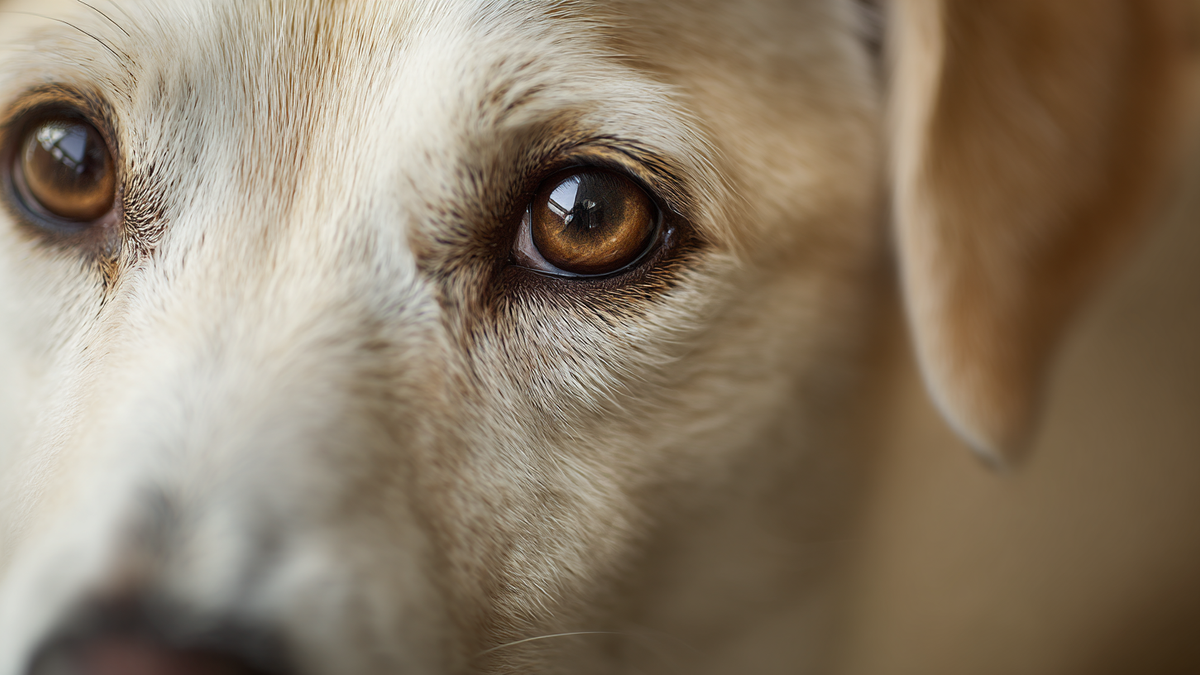
A year into building CANIQO, the things we got wrong taught us more than the things we got right. Here is what shaped the product into what it is now. Image Prompt (16:9 landscape): Wide landscape photo, 16:9 aspect ratio, a calm medium-sized dog sitting on a wooden floor next to a laptop and a notebook in a softly lit home office, soft natural daylight from a nearby window, warm tones, shallow depth of field focused on the dog, photorealistic, editorial quality, no text or graphics.
A year into building CANIQO, the most useful exercise has not been looking at what is working. It has been looking at what we got wrong, what we had to change, and what surprised us about how owners actually use the product compared to how we expected them to. Most of what is good about the app today exists because something earlier did not work.
This is the part of building a product that does not show up on the website. The pivots, the misreads, the assumptions that fell apart on contact with real users. None of it is dramatic. It is just the work of paying attention.
What We Got Wrong About Onboarding
The first version of the product assumed owners would scan their dog immediately after signing up. The thinking was that the value of the app is in the score, so the fastest path to that value is to put the camera in front of the user as soon as possible. We were wrong.
What we found is that owners need a reason to scan, and that reason is rarely is my dog healthy. Healthy dogs are not the urgent case. The owners who scan immediately on signup are usually doing so because they have a specific concern. They saw something. They felt something. They are looking for information, not for monitoring.
This shifted how we think about the entire product. The most valuable user is not the one who scans on day one. It is the one who scans on day forty, having built a baseline over the first weeks. The trend is the product. The score is the entry point.
We rebuilt the onboarding around that insight. Less pressure to scan immediately. More framing around what the app actually offers over time. The result is that the users who stick around are the ones who understand from the beginning that this is a long-term tool, not a single-use answer.
What We Got Wrong About the Score
The first version of the score was too sensitive. Small variations in photo quality, lighting, or pose produced larger score swings than they should have. We were optimizing for showing that the AI was paying attention, when what users actually needed was for the score to be stable enough to trust as a baseline.
If a score moves five points between two photos taken an hour apart, the user cannot use it. It is noise. The product becomes a guessing game about whether the change reflects the dog or reflects the photo. Users either start gaming the system to get the score they want, or they stop trusting it entirely.
We adjusted the scoring to weight visible signals more conservatively and to require more confidence before producing meaningful score changes. The trade-off is that the app is slower to flag subtle issues in a single scan. The benefit is that the trend line is now clean enough to be genuinely useful. Two scans a week apart, taken in similar conditions, produce comparable scores. That stability is what makes the trend mean anything.
What We Got Wrong About Vet Positioning
We started with the language of complementing veterinary care, but in practice the early product still felt like it was nudging owners toward the question is my dog okay. That question is in vet territory. We were not equipped to answer it, and the framing put us in a category we did not want to be in.
The shift was to position the app squarely on the visible side. We are not telling you if your dog is healthy. We are telling you what is observable in this photo, and how that compares to what was observable in earlier photos. The conclusion about whether anything is wrong belongs to a vet. Our job is to give owners a clearer view of the visible changes, so when they go to the vet, they have something specific to bring with them.
Once we stopped trying to imply more than we could deliver, the product became easier to explain and more useful in practice. Owners stopped expecting it to be a diagnostic tool and started using it as a tracking tool, which is what it actually is.
What Surprised Us About Users
The single biggest surprise was who showed up. We assumed our core audience would be owners of senior dogs, people actively dealing with health concerns, and dog owners with previous bad experiences who wanted earlier warning systems. Those users did show up, but they were not the majority.
The biggest user group has turned out to be people with relatively young, healthy dogs who want to know what normal looks like so they can recognize abnormal later. They are not scanning because something is wrong. They are scanning because they want to build the muscle of paying attention now, when it is easy, so they have something to compare against when it stops being easy.
That changed how we think about the product story. The app is not primarily for crisis moments. It is for the long stretch of healthy ownership, where the baseline becomes valuable precisely because nothing has gone wrong yet.
What We Got Right by Accident
The choice to start with photos rather than questionnaires was the right one, but we did not fully understand why at the time. We made the choice because we believed visual signals were richer than self-reported answers. What we found is that the bigger benefit is something else entirely.
Photos lower the friction of monitoring. A weekly photo is something owners can sustain. A weekly questionnaire is not. The thing that makes the app actually used over months is not the quality of the analysis on any single scan. It is the fact that a scan takes thirty seconds. Habits live or die on friction, and a low-friction monitoring tool is a tool that gets used. A high-friction one is one that gets abandoned by week three.
We did not pick photos for the friction benefit. But the friction benefit has turned out to matter more than the signal quality benefit, and that has shaped how we think about every new feature. If it adds steps, it has to add a lot of value. If it adds friction without adding meaningful value, it does not ship.
What Has Stayed the Same
The core idea has not changed. CANIQO exists to give owners a clearer view of what is visible in their dog over time, so they can catch gradual changes earlier and bring better information to their vet. Everything else has been adjusted. The onboarding, the scoring, the language, the way we describe the product to new users. The center has held.
That has been the most useful internal discipline. When we have been tempted to expand into adjacent areas like diet recommendations, training advice, or more general health content, we have asked whether the addition serves the core. Most of the time it does not, and we have not added it. The product is more focused now than it was a year ago, not less.
The Frame for Year Two
The next year is mostly about making the existing product better at what it already does. Cleaner trend analysis. More useful vet-facing data. Better photo guidance so first-time users get cleaner reads. Smarter handling of breed-specific considerations. The roadmap is unglamorous and incremental. That is fine. The dramatic stuff has been done. The next phase is making the boring parts work better.
We are also paying more attention to the relationship between the app and the vet visit. There is a real opportunity to make CANIQO data genuinely useful in the exam room, and most of that work is about formatting and presentation rather than new capabilities. A trend graph that a vet can scan in fifteen seconds is more useful than a dashboard that takes five minutes to interpret. Same data, different packaging.
What We Hope Owners Take Away
The most important thing we have learned is that the value of the app is in the habit, not the individual moment. The owners getting the most out of CANIQO are not the ones who scan once with a specific question. They are the ones who scan weekly without one. The baseline is the product. The trend is the product. The score is the entry point.
If you are using the app, the best thing you can do is be consistent. Pick a day. Take the scan. Glance at the result. Most of the time nothing will happen, and that is the entire point. The data accumulates quietly until it becomes useful, usually before any specific reason has appeared.
Start your dog's record at caniqo.com and after a few months, you will have something that did not exist a year ago. A visible history of your dog, week by week, that you can carry into every vet visit for the rest of their life.
See what your dog can't tell you.