
April 26, 2026
What Your Dog's Nose Can Tell You About Their Health
The old wet-nose-means-healthy rule is mostly a myth. Here is what your dog's nose can actually tell you, and what changes are worth paying attention to.
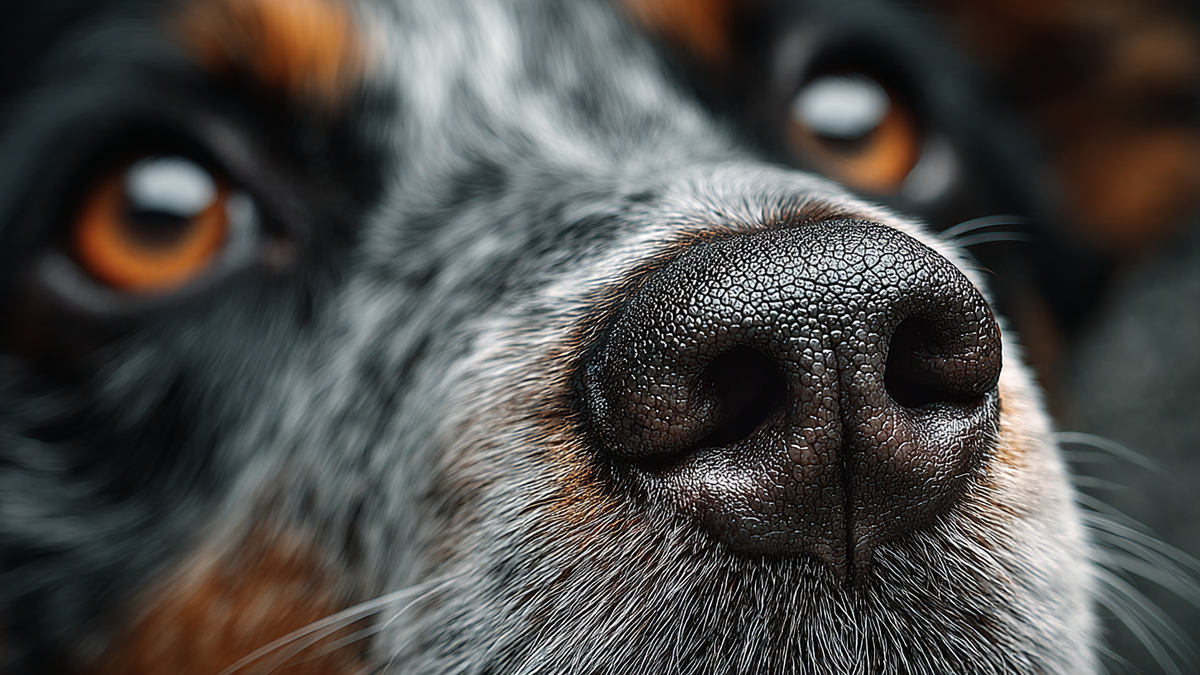
Almost every dog owner has heard some version of the same rule. A wet nose means a healthy dog. A dry nose means something is wrong. It is one of the most repeated pieces of folk wisdom in pet care, and it is mostly inaccurate.
A dog's nose changes throughout the day for reasons that have nothing to do with their health. It can be dry after a nap because they have not licked it in a while. It can be wet after drinking water or being outside in cool air. It can be warm after lying in the sun. None of these things mean anything on their own.
What does mean something is a change in the nose that lasts. The texture, the color, the moisture pattern, and the symmetry of the nose all carry real information when they shift away from your dog's normal baseline.
What a Healthy Nose Actually Looks Like
A healthy dog nose is usually slightly moist, smooth, and consistent in color. The nostrils are open and symmetrical. The skin around the nose is supple, not cracked. The pigmentation, whether black, brown, pink, or spotted, stays roughly the same year over year.
Some dogs have naturally drier noses than others. Brachycephalic breeds like bulldogs and pugs often have less moisture because of their facial structure. Older dogs sometimes develop slightly drier noses as a normal part of aging. None of that is automatically a problem.
Changes Worth Paying Attention To
Persistent crusting or thick flakiness on the nose can indicate an autoimmune condition, a nutritional deficiency, or in some cases a contact reaction to plastic food bowls. If the texture of the nose changes and stays changed for more than a week, it is worth a closer look.
A nose that becomes consistently dry and cracked, especially with visible fissures, is not just dehydration. Hyperkeratosis, where the nose tissue thickens and hardens, is a real condition that can develop in some breeds and in older dogs. It is not painful at first, but if left alone the cracks can become deep enough to bleed.
Color changes are another signal. A nose that lightens significantly, sometimes called snow nose or winter nose, can be normal and seasonal. But a nose that loses pigment patchily and stays that way, or develops new dark spots, can indicate skin conditions that warrant a vet visit.
Asymmetry matters too. If one nostril is producing discharge and the other is not, that is almost always worth investigating. Bilateral discharge can be a mild upper respiratory issue. One-sided discharge is more often something localized that needs attention.
Bleeding is never normal. A nose that bleeds without an obvious injury, even a small amount, should be looked at by a vet. It can indicate anything from a foreign object lodged inside to clotting issues to less common but more serious conditions.
What the Nose Will Not Tell You
The nose is not a thermometer. A warm nose does not mean a fever. A cool nose does not mean a healthy dog. If you actually want to know whether your dog has a fever, you need a real thermometer. The nose will not give you that information, no matter how many times the internet claims otherwise.
The nose also will not tell you whether your dog is dehydrated. Skin elasticity, gum moisture, and energy level are far better indicators than nose moisture.
How to Use This Information
Look at your dog's nose every few days, not obsessively. You are building a baseline. The point is not to inspect for problems. The point is to know what normal looks like for your specific dog so you can notice when something genuinely changes.
When something does change, pair it with the rest of what you are seeing. Coat condition, eye clarity, energy, appetite, and posture all add context. A single change in the nose by itself is rarely the whole story. A change in the nose combined with anything else is worth acting on.
Upload a clear photo at caniqo.com and the AI will analyze the visible signals across your dog's face, including the nose, eyes, and surrounding skin. Pair what you observe day to day with what the analysis can see, and small changes stop slipping by.
See what your dog can't tell you.