
March 16, 2026
What Your Dog's Walk Is Telling You About Their Health
Your dog's walk reveals more about their health than almost anything else. Here's what to look for — and why it matters before problems become obvious.
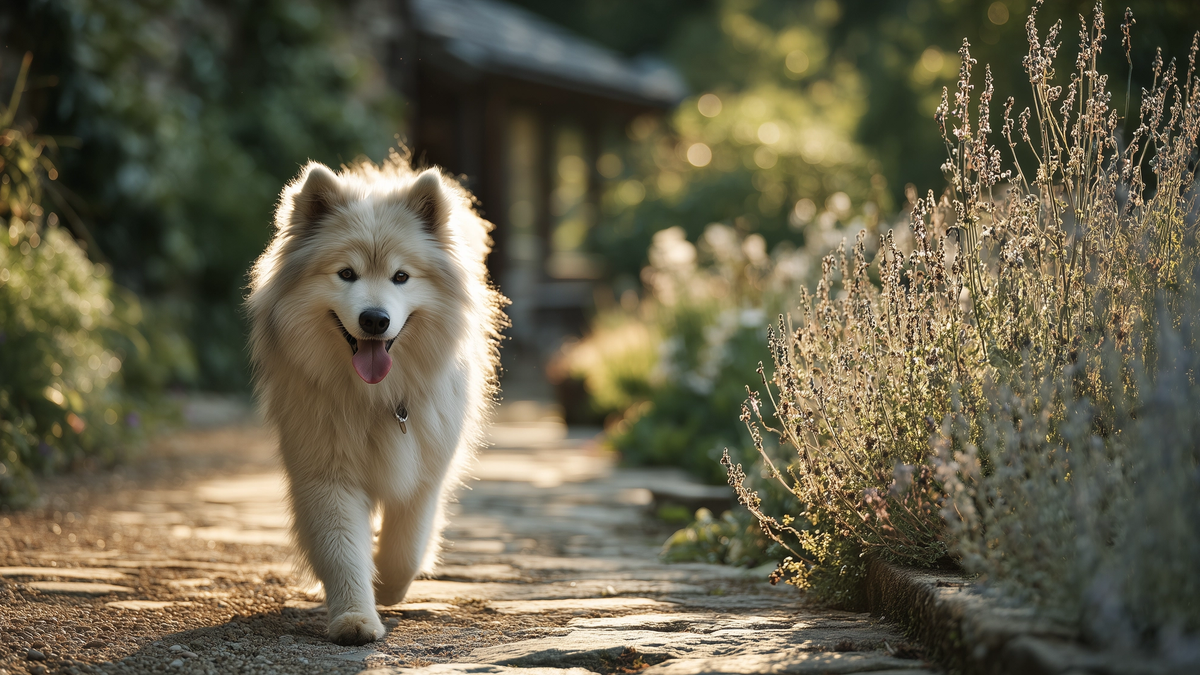
What Your Dog's Walk Is Telling You About Their Health
Most dog owners watch their dog walk every single day and see nothing. Not because there's nothing to see — but because they don't know what they're looking for.
That's not a criticism. It's just the reality of how we observe things we see constantly. The changes are gradual, we adapt to them, and by the time something is obviously wrong, it's been quietly developing for weeks or months.
Your dog's gait — the way they move — is one of the most information-dense health signals available to you. And unlike coat condition or eye clarity, movement tells a story that a static photo can't capture.
Why Gait Is a Health Signal Most Owners Overlook
There's a reason vets ask "has your dog been moving differently lately?" at almost every appointment. Movement is how the body expresses what it can't hide. Pain management, compensation patterns, muscle weakness, joint stiffness — all of it shows up in how a dog walks before it shows up anywhere else.
The problem is that most owners don't have a baseline. They know their dog "seems a bit stiff lately" but can't say when it started, whether it's getting worse, or which leg is actually affected. That vagueness makes it hard to act — and hard for a vet to assess without hands-on examination.
Understanding what healthy gait looks like, and what deviations to watch for, is one of the most practical things you can do as a dog owner.
What Healthy Dog Gait Actually Looks Like
A dog moving well is genuinely satisfying to watch. Here's what you're looking for:
Stride symmetry. Each pair of legs should move with roughly equal reach and push. A dog favouring one leg — even subtly — will show a shorter stride on that side. Watch the distance each paw travels forward before hitting the ground.
Head carriage. A dog in discomfort from a front limb issue will often bob their head downward when the painful leg bears weight, and lift it when the sound leg does. It's a compensatory motion the body makes automatically. Once you know to look for it, you'll notice it immediately.
Hip movement. The rear end should have a fluid, even sway as the dog moves. Stiffness in the hips or lower back tends to reduce this movement on one or both sides. A dog with hip dysplasia or early arthritis often shows a shortened rear stride and a reduced swing on the affected side.
Smoothness overall. Healthy movement is fluid. A dog that hesitates mid-stride, shifts weight unexpectedly, or moves with a kind of mechanical stiffness — rather than the natural flow of a relaxed, comfortable gait — is worth watching more closely.
Willingness to move. This one is behavioural rather than mechanical, but it matters. A dog that was previously enthusiastic about walks and now hangs back, stops frequently, or seems reluctant to get going is communicating something through that reluctance.
The Signals That Warrant Closer Attention
None of the following are emergency signals on their own. But any of them, especially if new, persistent, or worsening, is worth a call to your vet:
One leg landing with a noticeably shorter stride than the opposite leg
Head bobbing that correlates with a specific leg bearing weight
Reduced or asymmetric hip sway during walking
Frequent pausing, shifting weight, or reluctance to maintain pace
Sitting or lying down during a walk that would previously have been easy
A change in how your dog gets up after resting — particularly stiffness in the first few steps
The tricky part is that these signals are far easier to spot when you're watching specifically for them, with the full body in frame, at a consistent pace. Catching them during a regular walk — when you're also managing a leash, watching for traffic, and thinking about something else — is genuinely difficult.
Why Tracking Matters More Than a Single Observation
One slightly stiff morning doesn't mean much. A pattern of stiff mornings that are gradually increasing over six weeks means quite a lot. The difference between the two is documentation.
Vets consistently say that one of the most useful things an owner can bring to an appointment isn't just a description of the problem — it's a timeline. When did it start? Is it every day or some days? Is it worse after rest or after exercise? Getting better or worse?
Most owners can't answer those questions with confidence, not because they aren't paying attention, but because they have no systematic way of recording what they observe. Memory isn't reliable over weeks and months, especially for gradual changes.
How CANIQO's Gait Check Works
This is exactly the gap that Gait Check was built to close.
You record a short walking clip — 15 to 20 seconds, your dog walking away from the camera and back — and CANIQO's AI analyses the footage across five movement signals: stride symmetry, gait smoothness, head bobbing, hip movement, and willingness to move. The result is a structured observation with a confidence level, a plain-language summary, and guidance on whether the findings are worth a vet visit.
It's not a diagnosis. It's what monitoring looks like between appointments — an objective record of how your dog is moving today, that you can compare against how they were moving last month.
The feature was built specifically because movement is the health signal that's hardest to track without video. A photo tells you about coat, eyes, and body condition. Video tells you how your dog is actually feeling when they move through the world.
The Bottom Line
Your dog walks in front of you every day. That's an enormous amount of data that most owners never use, simply because they don't have a framework for what they're looking at.
You don't need to become an expert in canine biomechanics. You just need to know the five or six signals worth watching, establish a baseline for your specific dog, and notice when something deviates from it.
That's it. Catch the change early. Ask the question. Let your vet take it from there.
If you want a structured way to start monitoring your dog's movement, run a free Gait Check at caniqo.com. See what your dog can't tell you.
Want to know what your dog's visible health signals look like right now? Caniqo's free scan takes under a minute — no account, no equipment, just a photo.
Start your dog's free health scan →