
May 14, 2026
Why Your Dog's Food Bowl Might Be Telling You More Than You Think
How your dog eats is often more revealing than what they eat. Here is what to watch for at the bowl and what subtle changes actually mean.
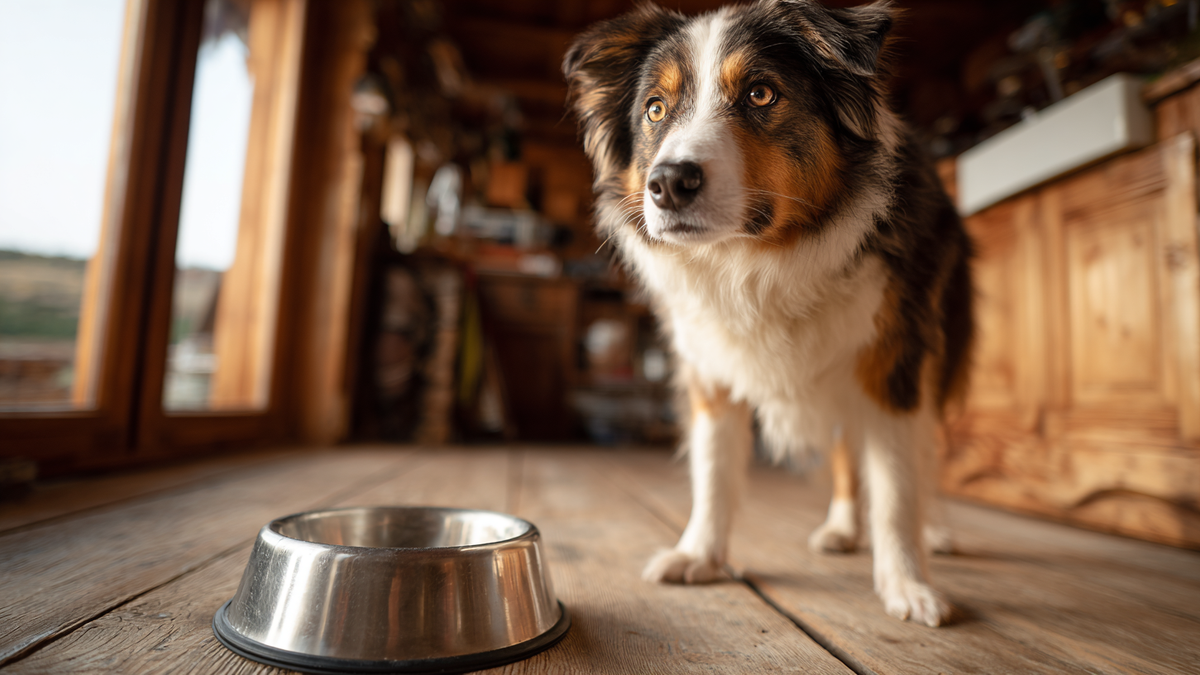
Most owners pay attention to what their dog eats. Brand, ingredients, protein source, kibble versus fresh. Far fewer pay attention to how their dog eats. That is a mistake, because how a dog approaches their food bowl is often a much earlier indicator of health changes than what is in the bowl in the first place.
Eating behavior is a baseline that almost every owner has unconsciously memorized without realizing it. You know how fast your dog usually eats. You know whether they finish in one go or graze. You know whether they stand or lie down. You know whether they eat the moment the bowl hits the floor or wait until you walk away. When any of that changes, it means something, even when nothing else has.
The Speed Signal
Eating speed is one of the most reliable behavioral indicators in a dog's day. A dog that normally finishes a meal in under a minute and now takes three minutes is communicating something. So is a dog that has always been a slow grazer and suddenly inhales their food.
A slowdown in eating speed without a change in food or routine usually points to one of three things. The first is dental discomfort. A cracked tooth, irritated gums, or early periodontal disease can make chewing painful enough that a dog will slow down without refusing food entirely. The second is nausea or low-grade stomach discomfort. Dogs with mild gastrointestinal issues often eat more cautiously, taking smaller mouthfuls or pausing between bites. The third is general discomfort somewhere else in the body. A dog with neck or shoulder pain may eat slower because lowering their head to the bowl is uncomfortable.
A sudden speed increase is less common but worth paying attention to. It can indicate increased appetite from an underlying condition, anxiety around food security, or a dog that has not been eating enough at previous meals and is making up for it.
The Posture Signal
Watch how your dog stands at the bowl. Most healthy dogs stand square with their head lowered comfortably into the bowl. They shift their weight evenly between their front legs. They do not need to brace or compensate.
Subtle changes in posture during meals are one of the earliest signs of musculoskeletal issues. A dog who starts standing with their front legs slightly splayed wider than usual may be trying to lower their head without bending their neck as much. A dog who shifts weight onto one side while eating may be unloading the other side because of joint discomfort. A dog who suddenly prefers eating from a raised bowl, when they were fine with a floor bowl for years, is telling you something about their neck, shoulders, or front legs.
Lying down to eat is also worth noting, especially in a dog that used to stand. Some dogs have always eaten lying down and that is fine. A change to lying down is different. It usually means standing has become less comfortable than the alternative.
The Hesitation Signal
A dog that approaches the bowl, sniffs the food, and walks away, only to come back a few minutes later, is showing hesitation. Occasional hesitation is normal. Repeated hesitation across multiple meals is not.
Food hesitation is often the first sign of nausea, especially in dogs that have always been enthusiastic eaters. It can also indicate a developing aversion to a specific food, which sometimes happens when a dog has had repeated mild stomach upset on a particular brand or protein source. They start to associate the food with discomfort even when the connection is not obvious to the owner.
Hesitation paired with lip licking, swallowing without eating, or walking to the water bowl repeatedly is a stronger signal. Those three behaviors together over more than one meal point to nausea more often than to pickiness.
The Pickiness Trap
A dog that has always been picky is not the same as a dog that has become picky. New pickiness in a previously consistent eater is almost never just pickiness. It is a behavior change that is being labeled as a personality trait.
Owners often respond to new pickiness by adding things to the food. Toppers, broth, switching brands, mixing in fresh ingredients. That usually works in the short term because the new food is novel and the dog will eat anything new at first. But the underlying issue, if there is one, is not addressed, and the cycle tends to repeat with each new food.
If your dog has become picky in the last few weeks and used to eat without issue, the question is not which food to switch to. The question is what changed that made eating less appealing.
The Water Bowl Connection
Pay attention to water intake alongside food intake. A dog that is drinking noticeably more or noticeably less than usual, in combination with any change in eating, is a meaningful pairing. Excessive thirst can indicate kidney issues, diabetes, or hormonal conditions. Reduced thirst can accompany nausea or systemic discomfort.
Most owners do not measure water intake, and they do not need to start. But noticing whether the bowl is empty more often or less often than it used to be is enough to spot a trend.
What to Track
You do not need a spreadsheet. You need to know four things. How fast your dog usually eats. What posture they use. Whether they hesitate. Whether they finish the bowl. If any of those four things has shifted in the last two weeks, that is information worth bringing to a vet, especially if it pairs with anything else you have noticed.
When to Act
A single off meal is nothing. A pattern of changed eating behavior across more than three or four meals, with no obvious explanation like hot weather or a recent treat, is worth a vet conversation. If your dog has fully refused two consecutive meals, that is a same-day call, not a wait-and-see.
The bowl is one of the most consistent moments in a dog's day. That consistency is exactly what makes it such a sensitive early indicator. When the routine changes, the dog is almost always changing first.
Upload a photo at caniqo.com and the AI will analyze visible signals across your dog's body condition, posture, and overall appearance. Pair what you see at the bowl with what the analysis can see in the image, and small shifts stop slipping by.
See what your dog can't tell you.