
June 8, 2026
Why Your Dog's Paws Deserve More Attention Than They Get
Paws take more abuse than any other part of a dog's body and show problems earlier than most owners realize. Here is what to actually look for.
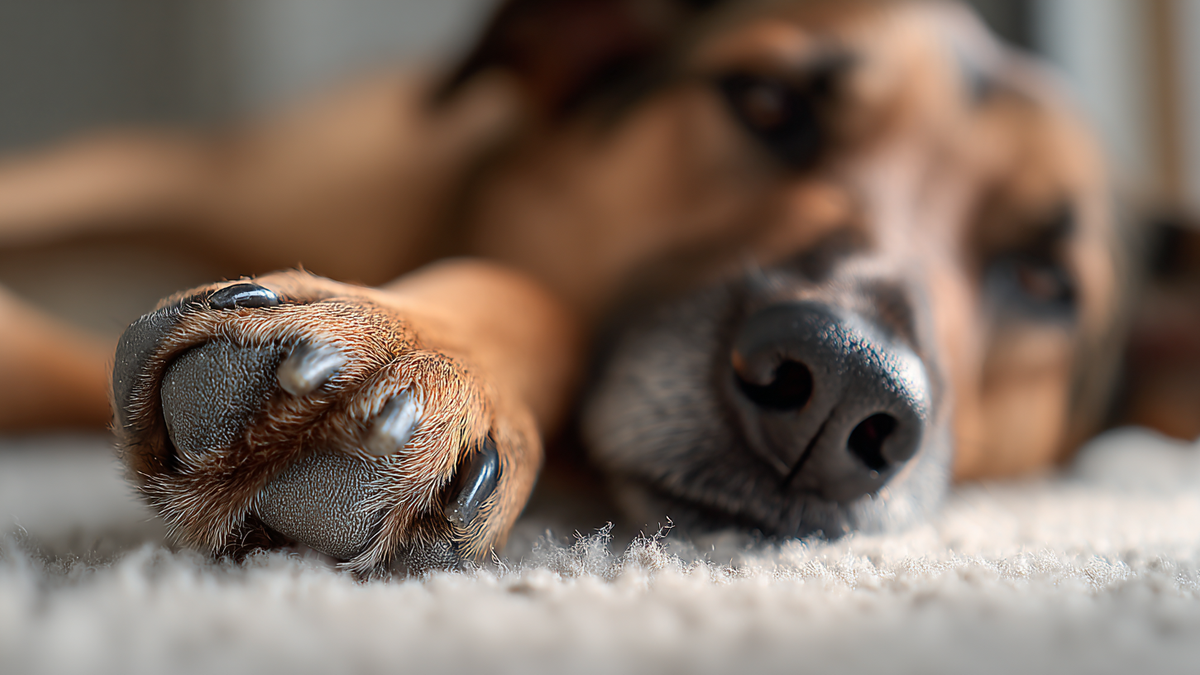
Paws are one of the most overlooked parts of a dog's body. Owners look at the face, the coat, the eyes, and sometimes the teeth. The paws rarely get a second glance unless the dog is actively limping or chewing them. That is a missed opportunity, because paws take more daily abuse than any other part of the body and show signs of problems earlier than most owners realize.
A dog's paws are in contact with every surface they walk on. Hot pavement, cold concrete, gravel, grass treated with chemicals, salted sidewalks in winter, sand, mud. They absorb impact with every step. They carry every gram of the dog's weight. They are also surprisingly sensitive, and they are doing all of this with a layer of skin that, while thicker than the rest of the body, is still skin.
Looking at your dog's paws once a week is one of the most informative habits you can build, and almost no one does it.
What a Healthy Paw Looks Like
The pads should be relatively smooth, with a consistent texture across the bottom of each pad. Some texture is normal and helpful for traction. What you do not want to see is deep cracking, peeling, or hardened thickening that looks distinctly different from the rest of the pad.
The color of the pads varies by dog, from pink to brown to black. What matters is consistency. The pads should be roughly the same color across all four paws, and the color should remain stable over time. A pad that has changed color recently, especially if it has darkened in patches or lightened in spots, is showing you something.
The fur between the toes should be clean and dry. The toenails should be trimmed to a length where they do not click loudly on hard floors and do not curve into the pad. The skin between the toes, often called the interdigital area, should be the same color and texture as the rest of the underside of the paw.
The Most Common Issues
Cracked or peeling pads are one of the most common findings, particularly in dry weather, after long walks on rough surfaces, or in dogs that walk a lot on hot pavement in summer. Mild dryness is usually manageable at home with paw balm and shorter walks until the pads recover. Deep cracks that bleed or that produce visible discomfort when walking are different and warrant a vet visit.
Burns from hot pavement are one of the most underestimated paw injuries. The rule that works well in practice is to press the back of your hand against the pavement for seven seconds. If you cannot hold it there comfortably, the pavement is too hot for your dog. Burns can happen surprisingly quickly, and they are often not visible to the owner until the next day when the dog starts limping or licking. By then the damage is done.
Interdigital cysts and infections are common in dogs that lick their paws frequently. The area between the toes is a moist, warm environment, and once the skin barrier is disrupted by chronic licking, bacteria and yeast can establish themselves easily. The result is a red, swollen, sometimes painful area between two toes that can develop into a hard nodule. These often need vet treatment to resolve, and they tend to recur in the same spot if the underlying cause of the licking is not addressed.
The cause of the licking is usually allergies. A dog that licks their paws frequently is almost always responding to environmental or food allergens. The licking is the symptom. The underlying allergic response is the actual problem, and treating just the paw without addressing the allergy means the cycle keeps repeating.
Foreign material between the toes is a frequent cause of sudden paw discomfort. Grass seeds, particularly the awn-like seeds from certain grasses, can lodge between the toes and migrate inward. Splinters, small pieces of glass, gravel, and dried bits of plant material can all become embedded. A dog who suddenly starts limping or paying intense attention to one specific paw, with no obvious external injury, often has something stuck. Check carefully between each toe and along the edges of the pads.
Torn or split toenails are common and surprisingly painful. They often happen when a dog catches a nail on something, especially during a fast turn or jump. The injury can bleed significantly and the dog may not put weight on the paw for hours. Vet attention is usually needed, partly because the damaged nail often needs to be properly trimmed to prevent further tearing, and partly because the exposed quick is vulnerable to infection.
Nail problems beyond breaks include excessive growth, ingrown nails curving into the pad, and brittle nails that split easily. Dogs whose nails click loudly on hard floors are due for a trim. Dogs whose nails are causing them to walk differently are overdue.
Pad thickening, sometimes called hyperkeratosis, can develop over time in older dogs and in certain breeds. The pads become hard, cracked, and rough, sometimes with horn-like extensions of tissue growing from the surface. This is treatable but rarely fully reversible, and catching it early gives you better management options.
The Subtle Signs Owners Miss
A dog that has started shifting weight off one paw when standing, even slightly, is showing you something. A dog who used to greet you at the door and now stays in the same spot may be avoiding the trip across hard floors. A dog who has become hesitant on stairs may be reacting to paw discomfort rather than joint pain, particularly if the hesitation is on slick surfaces.
Licking is the loudest signal. Occasional paw licking is normal. Frequent, focused licking of one or more paws is communication. Look at what they are licking. Compare it to the other paws. The difference will usually tell you which paw needs attention and roughly where the issue is.
Seasonal Considerations
Summer brings hot pavement, burned pads, dried-out cracks, and stings or punctures from various plant material. Check the pads after every walk on warm days, especially the larger central pad.
Winter brings salt exposure, ice melt chemicals, cold-induced cracking, and the buildup of ice balls between the toes in dogs with feathered paws. Wipe paws after every walk on treated surfaces and consider boots for dogs that walk consistently on salted sidewalks.
Spring and fall bring grass seeds, allergens, and wet ground that can trigger interdigital issues. Pay special attention to the spaces between the toes during these months.
How to Actually Check
Once a week, while your dog is relaxed, gently lift each paw and look at it. Top, bottom, between the toes. Press each pad lightly to check for tenderness. Look at each nail. Look at the fur between the toes. The whole exercise takes a minute per paw.
Most dogs tolerate this well if they have been handled regularly. Dogs who pull their paws away suddenly may have a sore spot. Dogs who flinch when one specific pad is touched are showing you exactly where the problem is.
Do this weekly and you will catch most paw issues at the stage where they are easy to address.
When to Act
Visible cuts, persistent bleeding, deep cracks, or any sign that your dog is significantly favoring one paw warrants a vet visit. Persistent licking that has been going on for more than a few days, especially with visible redness or swelling between the toes, warrants a vet visit. Sudden severe lameness with no obvious cause warrants a vet visit.
Mild dryness, minor scrapes, and light wear can usually be managed at home with paw balm and reduced activity until things heal.
Why This Matters
The paws carry the dog through every part of their life. They are the foundation of every walk, every run, every jump. When they hurt, everything else suffers. Mobility decreases. Mood decreases. Exercise decreases. And because the discomfort is at ground level, where owners rarely look, the issues often get a long head start before anyone notices.
A weekly paw check is one of the highest-leverage habits in dog care. It takes almost no time and catches things that would otherwise go unaddressed for weeks.
Upload a photo at caniqo.com and the AI will analyze visible signals across your dog's coat, posture, and overall condition. Combined with your own weekly paw check, you have two complementary ways to keep visible issues from going unnoticed.
See what your dog can't tell you.