
May 28, 2026
Why Your Dog's Treats Might Be Working Against Their Health Without You Knowing
Most owners underestimate how much treats contribute to their dog's daily intake. Here is the real math and what to watch for in everyday treats.
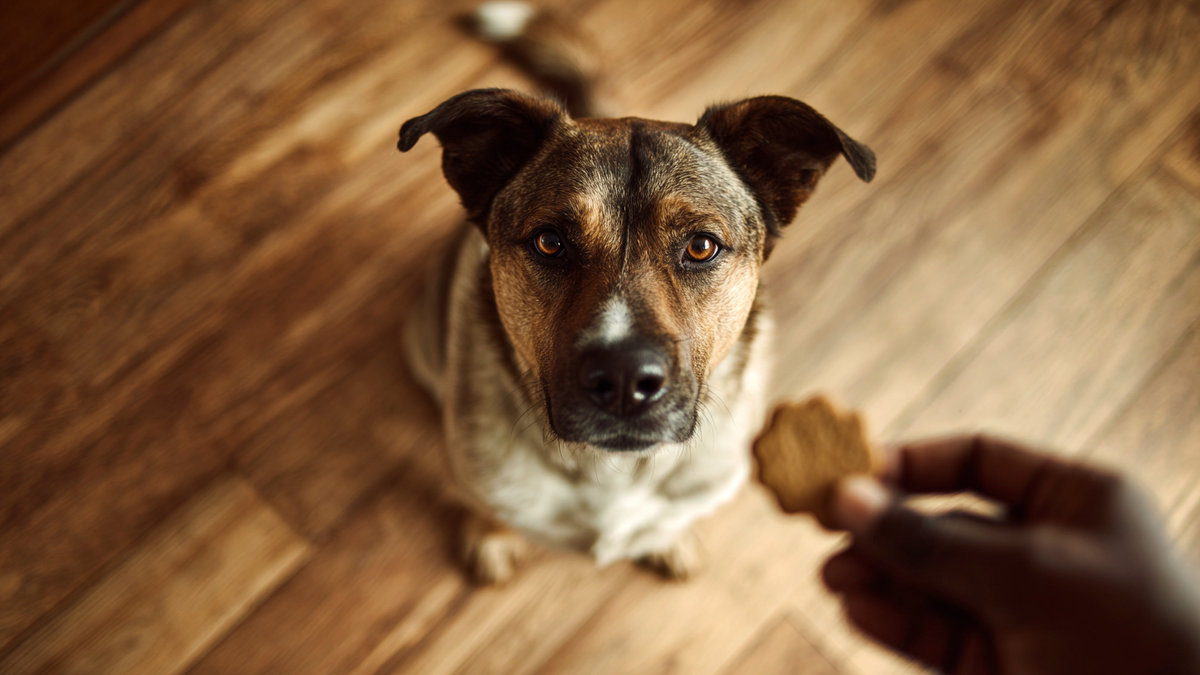
Most owners pay close attention to their dog's main food. Brand, protein source, ingredient list, calorie content. Then they hand out treats throughout the day without applying any of that same scrutiny. The result is one of the most common and least recognized contributors to weight gain and digestive issues in dogs, and it is almost entirely fixable once you can see it.
The math is not intuitive. A small dog eating two or three biscuit-sized treats a day can easily be taking in twenty to thirty percent of their daily calories from treats alone, completely outside of what is in the food bowl. Owners who carefully measure breakfast and dinner often have no idea how much they are adding on top.
Why Treats Add Up Faster Than Owners Realize
A typical medium-sized dog needs around 700 to 900 calories a day. A standard biscuit treat is often 30 to 50 calories. A dental chew can be 80 to 150 calories. A piece of cheese the size of a thumbnail can be 50 to 70 calories. A peanut butter Kong filling can run 200 calories or more. None of those numbers sound dramatic on their own. Stacked over a normal day, they add up fast.
Veterinary nutrition guidelines generally recommend that treats make up no more than ten percent of a dog's daily caloric intake. For most household dogs, that translates to roughly 70 to 100 calories of treats per day. Most owners blow past that number before lunch without realizing it.
The math is invisible because treats are given one at a time, often in response to a behavior or as part of a moment. The owner is not thinking about calories. They are thinking about reinforcement, training, or just connecting with their dog. The accumulation only becomes visible later, in the form of weight gain that does not respond to portion control at meals.
The Hidden Sugar Problem
Many commercial treats contain ingredients that would surprise owners if they read the label. Corn syrup. Cane molasses. Sucrose. Brown sugar. These appear in surprising places, including dog treats marketed as natural or premium. They are added partly for palatability and partly for shelf life.
Dogs do not need any added sugar in their diet. Their pancreas is not set up to process it well, and chronic intake of sugary treats is associated with obesity, dental disease, and increased risk of metabolic conditions. The taste does not register to dogs the way it does to humans, which means the sugar is not even necessary for them to enjoy the treat. It is there because it makes the treat sell.
A useful habit is to actually flip the bag over and read the first five ingredients. If a sugar of any form appears in the first five, the treat is more confection than food.
The Salt Problem
Sodium content in commercial treats is often high, particularly in jerky-style products and dental chews. A few high-sodium treats a day is not dangerous in a healthy dog, but it can be a real issue in dogs with developing heart conditions, kidney issues, or any cardiovascular concerns. Older dogs in particular benefit from lower-sodium treat options, even when they appear otherwise healthy.
If your vet has ever mentioned heart health, kidney function, or blood pressure in your dog's annual exam, this is a category to look at.
The Ingredients That Actually Matter
For most owners, the simplest filter is to check whether the treat looks like food. Single-ingredient treats made from one protein source are generally the cleanest option. Freeze-dried liver, chicken, or fish. Plain dehydrated sweet potato. A piece of cucumber or carrot. These are real food in a different format. The ingredient list is short because there is nothing to hide.
Treats with a long ingredient list, especially ones containing flour, sugar, oils, colorings, and preservatives, are closer to processed snack food. They are not necessarily harmful in moderation, but they are also not contributing anything nutritionally meaningful, and they are usually higher in calories than the alternatives.
The Texture Question
Some treats present an additional issue beyond calories and ingredients. Hard chews like antlers, bones, and certain dental products can crack teeth. This is one of the most common causes of unexpected dental issues in middle-aged dogs, and the connection to the treat is often missed because the tooth damage develops over time.
A reasonable rule is the thumbnail test. If you cannot make a noticeable dent in the chew with your thumbnail, it is probably hard enough to damage a tooth. Most rawhide alternatives, soft dental chews, and freeze-dried treats are safe. Most hard bones, antlers, and very dense synthetic chews are not.
Training Treats Are a Different Category
If you are doing any kind of training with your dog, treats are essential and the math gets different. A training session can easily involve fifty to a hundred treat deliveries, and trying to make those out of regular biscuits would deliver an enormous calorie load.
The solution is small. Training treats should be roughly the size of a pea or smaller. Tear larger treats down to that size or use treats specifically formulated as low-calorie training rewards. A pea-sized piece of training treat delivers the same reinforcement value as a full biscuit, because the dog does not care about quantity. They care about the moment and the taste.
On training days, adjust the food bowl accordingly. If your dog has just done forty treat deliveries during a training session, they have probably had the equivalent of half a meal in treats. Reduce dinner to compensate.
What Counts as a Treat
This part trips up most owners. The dental chew counts as a treat. The piece of crust from your toast counts as a treat. The licks of yogurt from the empty container count as a treat. The pill pocket counts as a treat. The frozen Kong on a busy afternoon counts as a treat.
Almost everything that is not measured kibble or measured fresh food counts as a treat for the purpose of calculating the daily ten percent. The treat category is broader than most owners think.
What to Watch For
Pay attention to a few patterns. Has your dog's weight crept up in the last three to six months. Have you added a new treat to the routine. Are you giving more dental chews than you used to. Have any other household members started giving treats independently. Is anyone slipping table scraps that you may not be tracking.
If your dog is gaining weight despite consistent meal portions, the treats are almost always where the extra calories are coming from. Reducing or downsizing treats produces visible results much faster than reducing meals, because treats are usually where the surplus lives.
The Practical Fix
Pick a single jar or container, fill it with your dog's daily treat allowance in the morning, and only give treats from that container. When the container is empty for the day, you are done. This is the single most effective intervention for owners trying to bring treats under control, because it makes the abstract daily limit visible and physical.
Use real food in small portions for variety. A small piece of cooked chicken. A few blueberries. A slice of cucumber. These add interest to the treat lineup without adding processed ingredients or surplus calories.
When to Reassess
Anytime your dog's weight changes meaningfully, the treats are worth a hard look before changing the main food. Anytime you are seeing soft stool, mild digestive irritation, or general gastric inconsistency without a clear cause, the treats are worth a hard look before adjusting the food. Anytime energy levels seem off and bloodwork is clean, the treats are worth a hard look before assuming the issue is somewhere else.
The food bowl is the obvious lever. The treat container is the lever that most owners forget exists.
Upload a photo at caniqo.com and the AI will analyze your dog's visible body condition, posture, and overall appearance. Combined with a clearer picture of what is going in beyond the food bowl, you have two ways to keep weight and treat habits in check.
See what your dog can't tell you.